5 Famous Brand Failures and the Strategic Lessons Every Business Owner Should Learn


Billion-dollar brands don’t fail because they run out of money. They fail because they ignore the fundamentals: listening to customers, adapting to change, and respecting what makes their brand worth something in the first place.
The 5 Brand Failures: Different Companies, Same Costly Mistakes
Money doesn’t prevent failure. Neither does market dominance, decades of brand equity, or a team of world-class executives. Some of the most catastrophic brand mistakes in history were made by companies with every conceivable advantage.
The pattern is consistent: they ignored fundamental strategic principles.
They trusted internal assumptions over customer reality.
They dismissed disruption until it was too late.
They changed things customers loved without asking first.
These are five of the most instructive brand failures on record, and what they teach applies directly to decisions you’re making right now.
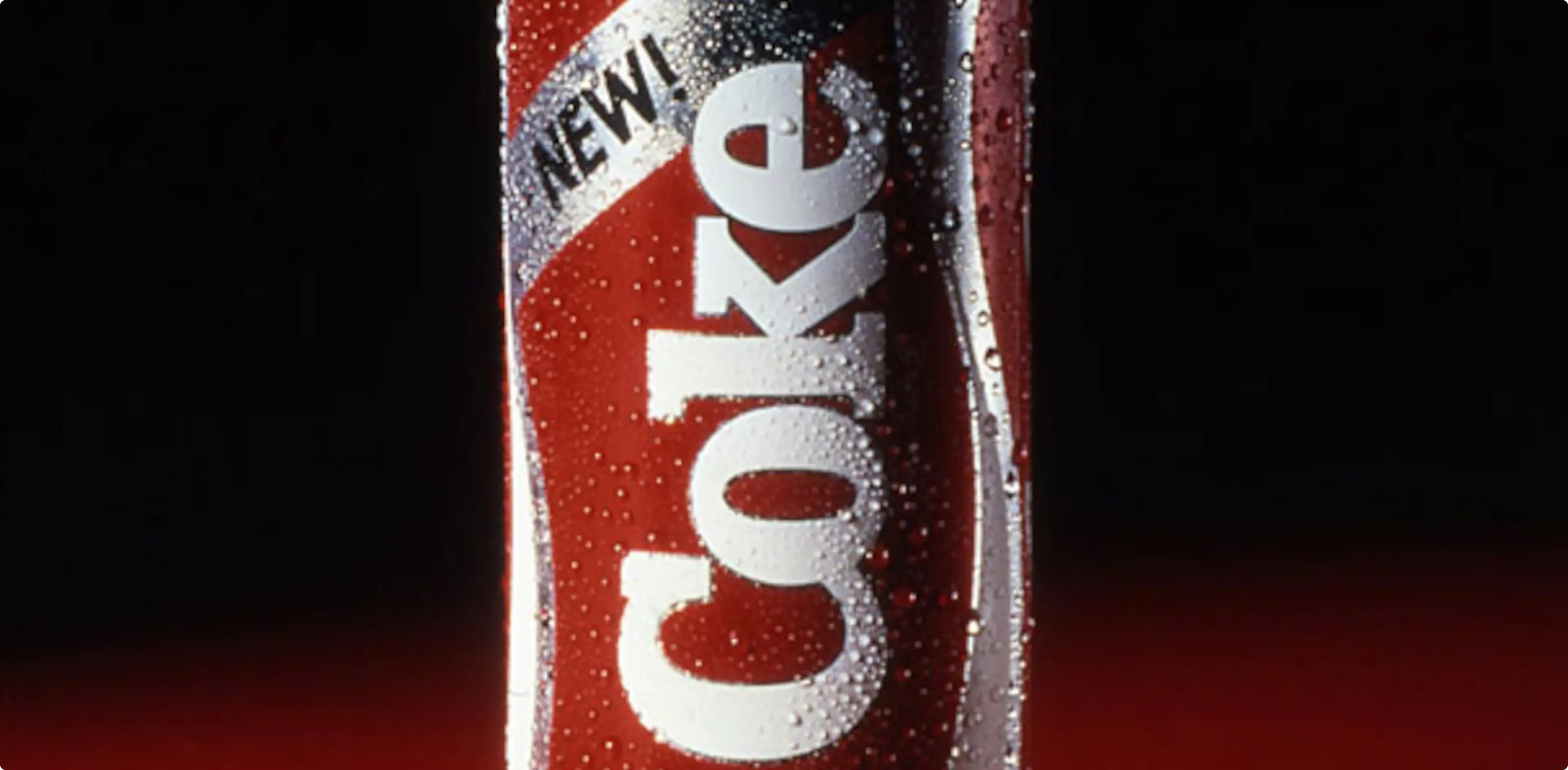
New Coke (1985): Don’t Fix What Isn’t Broken
In 1985, Coca-Cola was losing ground to Pepsi in blind taste tests. The strategic response seemed logical: reformulate the product. After 200,000 taste tests, the company launched New Coke with confidence.
The backlash was immediate and ferocious. Customers didn’t just dislike the new formula. They were angry. Coca-Cola received roughly 400,000 complaint calls and letters within weeks. Sales dropped sharply in markets where New Coke replaced the original. The company reversed course in 79 days, bringing back “Coca-Cola Classic” to a reception that bordered on celebration.
New Coke was eventually discontinued entirely.
The lesson: Customer attachment to a brand isn’t rational. It’s emotional. The taste tests measured preference for sweetness, not the 99-year relationship customers had with the original formula. A major brand change needs to be tested against emotional response, not just product metrics. What your customers feel about your brand often matters more than what they think.

Blockbuster: Adapt or Become a Cautionary Tale
In 2000, Netflix approached Blockbuster with an acquisition offer: $50 million. Blockbuster passed. At the time, Blockbuster had 60,000 employees, 9,000 stores, and 65 million registered customers. Netflix was a small DVD-by-mail startup. The decision looked reasonable from the inside.
By 2010, Blockbuster had filed for bankruptcy. Netflix, now a streaming giant, is valued at over $150 billion.
The mistake wasn’t simply turning down the acquisition. It was the underlying assumption that streaming was a niche play, not a structural shift. The threat didn’t come from another video rental chain. It came from a completely different business model.
The lesson: Disruption rarely looks threatening at first glance. The companies that destroy market leaders often start by appearing irrelevant. Monitoring your direct competitors isn’t enough. You need to watch what’s changing in customer behavior, even when the source of that change seems small.
Nokia: When Hardware Excellence Isn’t Enough
In the early 2000s, Nokia controlled roughly 40% of the global mobile phone market. Their hardware was genuinely excellent. Build quality, battery life, durability. Nokia phones were trusted worldwide.
Then Apple launched the iPhone in 2007. Google released Android. The competitive axis shifted from hardware to software ecosystems, and Nokia had no answer. Within five years, Nokia’s market share had collapsed. Microsoft acquired the company’s mobile division in 2014 for $7.2 billion, a fraction of what Nokia had once been worth.
Nokia’s engineers actually built early smartphone prototypes. The technology existed internally. The company’s structure and strategic focus on hardware simply couldn’t pivot fast enough to ecosystem thinking.
The lesson: In technology, the platform often matters more than the product. Apple and Google weren’t just building phones. They were building ecosystems of apps, services, and integrations that created switching costs and loyalty. Feature-by-feature competition loses to ecosystem competition. If you’re in tech, ask whether you’re building a product or a platform.
Quibi (2020): Funding Can’t Save Bad Product-Market Fit
Quibi launched in April 2020 with $1.75 billion in funding, Hollywood-caliber content, and a clear thesis: people want premium short-form video on their phones. Episodes ran under 10 minutes. Production budgets were massive. The founding team included industry veterans.
Six months later, Quibi shut down.
The platform peaked at around 910,000 daily active users, far below what was needed to sustain the business. Retention was the core problem. Users downloaded the app but didn’t return. The fundamental assumption, that people wanted cinematic-quality content in 10-minute mobile segments, simply didn’t match how people actually used their phones. TikTok, YouTube Shorts, and Instagram Reels had already answered that question differently.
The lesson: Capital validates nothing about product-market fit. Quibi had the funding, the talent, and the distribution relationships. What it didn’t have was proof that real customers wanted what it was building. Market research beats assumptions, every time. Talk to actual users before you build, not after.

Gap Logo Redesign (2010): Respect What Customers Love
In October 2010, Gap quietly replaced its iconic blue box logo with a new design: black Helvetica text with a small blue gradient square tucked in the corner. No announcement. No customer consultation. No transition period.
Social media responded within hours. Designers, customers, and brand watchers publicly dismantled the decision. The backlash was so swift and so loud that Gap reversed course in six days, restoring the original logo and abandoning the redesign entirely.
The estimated cost of the failed rollout, including design fees, production, and the reversal, ran into the millions.
The lesson: Brand equity is decades in the making. The Gap logo wasn’t just a visual mark. It was a recognition signal customers had built associations with over 40 years. Changing it without warning or buy-in felt like a betrayal. Evolution works. Revolution, without customer input, tends to backfire.
The Strategic Framework: What These Failures Have in Common
These aren’t stories about bad luck. Every one of these failures was preventable. The same strategic errors appear across all five cases:
Test before you commit. New Coke ran 200,000 taste tests but skipped the emotional response test. Gap launched without a single focus group. Customer feedback before a major change is not optional.
Adapt or become irrelevant. Blockbuster and Nokia both saw the signals. Neither responded quickly enough. Technology shifts don’t wait for market leaders to feel comfortable.
Research beats assumptions. Quibi built a product based on what its founders believed customers wanted. The customers disagreed. Assumptions that aren’t validated by real users are just guesses with a budget.
Respect what customers are attached to. New Coke and Gap both underestimated emotional loyalty. Brand recognition and customer affection are assets. Treat them accordingly.
Ecosystem thinking beats feature thinking. Nokia’s product was excellent. Its ecosystem was nonexistent. In competitive markets, the experience around your product often matters more than the product itself.
Winning brands stay close to customers, adapt early, and build brand equity with intention.
How to Avoid These Mistakes: A Practical Checklist
Before any major brand or product change:
Test with a small audience segment first. Measure both rational feedback and emotional response.
Separate internal excitement from customer validation. Your team’s enthusiasm is not market research.
Ask whether this change solves a real customer problem or an internal preference.
To stay strategically adaptable:
Track technology and behavior shifts in your industry quarterly, not annually.
Don’t dismiss threats because they come from outside your current competitive set.
If you operate in tech, ask regularly whether you’re building a product or a platform.
To validate your market:
Talk to actual customers before you invest, not after you launch.
Funding does not equal product-market fit. Neither does industry experience.
Build feedback loops into your process so you’re learning continuously, not reactively.
To protect brand equity:
Know which elements of your brand customers are emotionally attached to.
Refresh and evolve. Don’t discard and replace.
Major brand changes require customer buy-in, not just internal sign-off.
Success Leaves Clues. So Does Failure.
New Coke, Blockbuster, Nokia, Quibi, and Gap had something most businesses only dream about: resources, talent, and established market position. None of it was enough to save them from strategic missteps.
The lesson isn’t to avoid innovation. It’s to innovate with discipline. Test before you commit. Validate before you scale. Listen to your customers before you change what they love.
The brands that win long-term aren’t the ones with the biggest budgets. They’re the ones that stay close to their customers, adapt before they’re forced to, and treat brand equity as the strategic asset it is.
At Bright Nation Studio, we help brands make those decisions with clarity. Whether you’re rethinking your digital presence, planning a brand evolution, or navigating a market shift, we bring the strategic perspective that keeps you on the right side of these lessons. Ready to build something that lasts? Contact out team.