The Human-Agentic Paradox: Why AI SEO Strategies in 2026 Demand More Humanity, Not Less


AI now controls how your website gets ranked. Search engines powered by systems like Google’s SGE and Perplexity process the vast majority of queries through machine learning models trained to detect one thing: genuine value for real users. The paradox? The smarter AI gets, the more it rewards human qualities like depth, trust, and authentic expertise.
The Algorithm Got Smarter. Your Strategy Needs to Get More Human.
Here’s the paradox nobody in SEO wants to admit: the more powerful AI algorithms become, the less effective purely technical SEO tactics are.
Over 80% of search queries are now processed through AI-driven systems, including Google’s Search Generative Experience (SGE) and platforms like Perplexity. These systems don’t count keywords. They evaluate meaning, intent, credibility, and user satisfaction. They read your content the way a skeptical expert would.
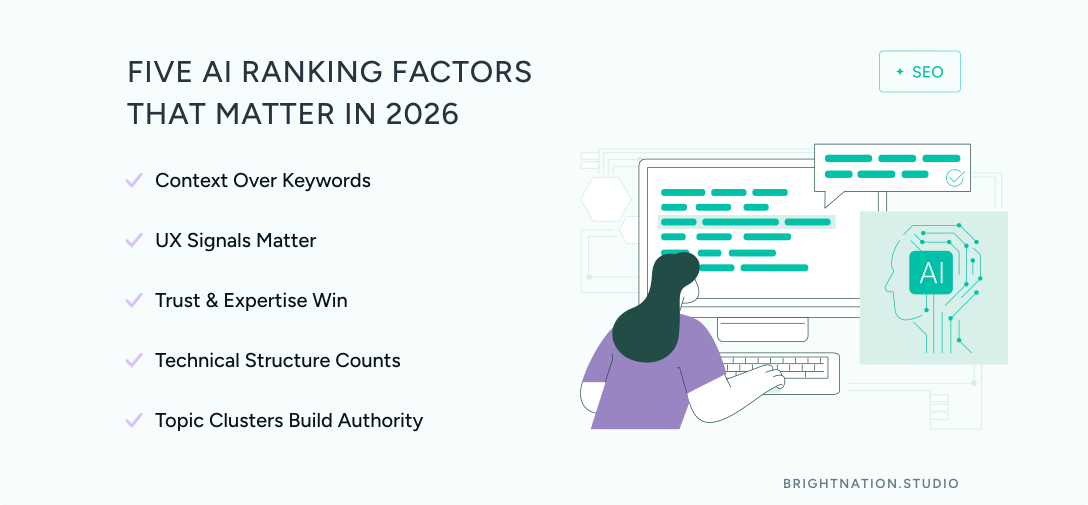
The 5 AI Ranking Factors That Actually Matter in 2026
1. Contextual Relevance, Not Keyword Density
AI doesn’t scan for keyword frequency. It reads for meaning.
Content written to satisfy algorithms, stuffed with exact-match phrases and hollow structure, gets identified and deprioritized. What ranks is content that thoroughly addresses a subject using natural, conversational language that mirrors how real people think and ask questions.
A well-documented case makes this clear: articles ranking in the top position for competitive queries often don’t contain the exact target keyword anywhere in the body. Meanwhile, pages that repeat the keyword 30 times sit on page four. The difference is depth of coverage and contextual clarity.
The strategy is simple. Write for the person reading, not the bot crawling. Cover the subject completely. Answer the questions your audience actually has.
2. Behavioral Signals: UX Is Now SEO
This is the shift most businesses haven’t fully absorbed yet.
AI ranking systems use real-time behavioral data to validate content quality. Time on page, scroll depth, bounce rate, and return visits are no longer soft metrics. They are ranking signals. Google’s systems interpret a user leaving your page in 12 seconds as a direct vote against your content’s quality.
Studies consistently show that pages with above-average engagement metrics rank significantly higher than technically optimized pages with poor user behavior data. The correlation between dwell time and ranking position is strong enough that SEO and UX can no longer be treated as separate disciplines.
Confusing navigation, slow load times, and cluttered layouts kill rankings. Your web designer is now, functionally, an SEO specialist.
The brands winning in search right now aren’t the ones who cracked the algorithm. They’re the ones who stopped trying to.
3. E-E-A-T: The Trust Framework AI Uses to Separate Experts from Content Machines
Google’s E-E-A-T framework (Experience, Expertise, Authoritativeness, Trustworthiness) has become the primary lens through which AI evaluates credibility.
Anonymous content fails this test immediately. AI cannot verify expertise it cannot see. Pages without clear authorship, credentials, or demonstrated experience are treated as unverifiable, regardless of how well-written they are.
What works: named authors with visible credentials, first-person insights drawn from real experience, specific case studies, and data that proves the author has actually done the thing they’re writing about.
Research from SEO testing communities has shown ranking improvements of 15 to 30% on pages where authorship and credentials were made explicit, with no other changes to content. That’s the value of trust signals made visible.
If your content doesn’t answer the question “why should I trust this person,” AI won’t surface it.
4. Technical Structure: Help AI Parse the Value You’ve Created
Exceptional content can be invisible to AI if the technical structure around it is broken.
Schema markup (JSON-LD) acts as a translator between your human creativity and machine understanding. It tells AI systems precisely what your content is, who wrote it, what questions it answers, and how it connects to other pages. Without it, AI has to guess, and it often guesses wrong.
The essentials: clean HTML, a logical heading hierarchy from H1 through H6, fast load times that meet Core Web Vitals benchmarks, and Schema markup on key pages. Use Google’s Structured Data Testing Tool to verify your implementation.
Technical structure doesn’t replace great content. It ensures great content gets seen.
5. Topic Clustering: Build a Content Ecosystem, Not Isolated Pages
Chasing individual keywords with standalone pages is a failing strategy. AI evaluates topical authority, meaning how comprehensively your site covers a subject area, not just how well one page targets one phrase.
Topic clusters work like this: one pillar page covers a broad subject in depth, and a network of supporting articles covers related subtopics, all internally linked. Brands that shift from isolated content to clustered ecosystems consistently see ranking improvements across entire topic areas, not just individual pages.
A network of five well-connected, authoritative posts outperforms one viral article every time. The signal AI reads is: this site understands this subject completely.
Map your content connections. Identify gaps. Build coverage that demonstrates real expertise across the topic, not just at its surface.

Let’s get started! Contact us today to discover how we can help.
What Doesn’t Work Anymore: Stop Wasting Resources
These tactics are not just ineffective. Some actively damage your rankings.
Keyword stuffing: AI detects unnatural repetition and treats it as a quality signal against you.
Thin content: 300-word articles targeting single keywords no longer rank. AI rewards depth and completeness.
Purchased backlinks: Link schemes are identified and devalued. Manipulated link profiles now trigger penalties rather than boosts.
Anonymous content: Without authorship signals, AI cannot verify expertise. Unverified content is deprioritized.
Technical neglect: A slow site with broken structure won’t rank regardless of content quality. Sites failing Core Web Vitals benchmarks lose ground to faster, cleaner competitors.
Sites still relying on these tactics have seen ranking drops of 20 to 40% following recent algorithm updates. The window to course-correct is narrowing.
Your AI-SEO Action Plan
Four moves, executed with discipline, will close the gap between where your content is and where it needs to be.
Audit your existing content. Read it as a skeptical human, not a content manager. Is it written for people or for bots? Does it demonstrate real expertise through specific examples and named authors? Is it part of a topic cluster or sitting in isolation?
Fix behavioral signals. Use heatmapping tools like Hotjar or Crazy Egg to find where users drop off. Improve page speed against Core Web Vitals benchmarks. Make navigation obvious and intuitive. Every UX improvement is an SEO improvement.
Implement technical foundations. Add Schema markup (JSON-LD) to your key pages. Fix heading hierarchy so AI can parse your content structure. Ensure your site is fully optimized for mobile, where the majority of searches now originate.
Build topic clusters. Identify your three to five core subject areas. Create or designate pillar content for each. Write supporting articles that cover related questions and link them back to the pillar strategically. Measure ranking improvement across the cluster, not just on individual pages.
The Algorithm Wants What Users Want
AI-driven SEO is not mysterious. These systems are trained to surface content that satisfies real users. They reward depth because users want thorough answers. They reward trust signals because users want credible sources. They reward seamless experiences because users leave confusing sites.
When you optimize for humans, AI follows
At Bright Nation, we help business leaders build digital presences that perform in this new environment. Not through tricks, but through strategy. If your current content approach was built for an older version of search, the time to rebuild it is now.